I'm a pretty strong person. I have had a life where I have been beaten down, trampled over, injured, deathly ill, and mentally scrambled. Through illness and injury, I have persevered. I have pushed through and come out the other side of my experiences stronger and wiser. I am confident that I can make it through just about anything. But even the strongest people feel weak at times.
Today, I am weak emotionally. For more than 6 weeks now, I have been fighting a massive sinus infection that just will not go away. I have dealt with migraine after migraine, several rounds of antibiotics and steroids, CT scans, blood work, exhaustion, and still trying to work and get my business off the ground. The longer it continues, the more likely surgery will be needed to clear the infection out. Quite honestly though, I would welcome it.
Over the weekend, the infection made its way into my chest and bronchitis is setting in: the figurative straw that broke the camel's back. I don't look sick, only tired. I don't sound sick (aside from the cough), just sad. But I am sick and I am tired and sad. Weeks of fighting this illness has left me short on spoons with nothing left in reserves and I still have another 2 weeks before I can see the specialist. The frustration and annoyance has compounded into an overall feeling of disappointment and feeling of hopelessness, that I will never be healthy again.
Before you freak out, yes, I know this is not true, but our emotions do not always follow our knowledge. I know health will come again and I will ignore the lies that my bipolar can tell me, but the feelings are still there and need to be acknowledged. Denying those feelings only make things worse. So today, I acknowledge my feeling of weakness. I acknowledge my desire of having someone just hold me and take care of me for a few days so I don't have to think about all the things I want to be accomplishing and can't.
I accept that I must take care of myself first, but that doesn't mean that I won't feel the frustration and disappointment of wanting to take care of those around me. So this is me asking for help from my family and friends, if you have a few minutes, drop me a message, give me a ring, or stop by my house to visit. Distract me from the disappointment of being ill. Tell me about your day or a funny joke. Run your big ideas by me so I have something else to ruminate on instead of feeling crappy. If you can spare it, run an errand for me or drop off a side dish for dinner so I don't feel quite so guilty for not being able to care for my family as I would like. Forgive me if I sound down in the dumps and understand that I am doing the best I can. Sometimes, we just need a little helping hand.

Bipolar Musings of my life, humor, health, family, friends, and beliefs.
Showing posts with label Spoons. Show all posts
Showing posts with label Spoons. Show all posts
Monday, February 17, 2014


Tuesday, October 29, 2013
Taking Care of Yourself First
I honestly don't know what it is, but people love to talk to me. They come to me with their dreams, their fears, their problems, and their celebrations. They come to me when they are sad and no one else understands or they can't figure out what it is they are feeling. What do I do? I listen. I take it all in, then I respond. This response may simply be a hug and a reassurance that I am always there to talk to. It may be a vote of support or encouragement, or I may give some advice, but I rarely sugarcoat things. In return, I now have several close friends who I trust to tell me the truth, even when I don't like it. It is especially frustrating when they use my own advice against me. In this case, the advice is:
This is one of the pieces of advice I hand out on nearly a daily basis. So many times, we put the needs of others ahead of ourselves. The result is exhaustion and illness which manifests in the inability to take care of those things you saw as more important. For example, you have to work to pay for the house over your family's heads and to put food on the table. You are super stressed out and tired because you have been losing sleep over an important project or task. In fact, this task is so important, that you can't possibly consider taking a couple hours off work to refresh yourself and relax. After all, you have to bring home that paycheck and those 2 or 3 hours just can't be sacrificed.
The problem is the stress lowers your immune system and lack of sleep only exacerbates the problem. Guess what happens next. If you thought "you get sick," you are right! You didn't take care of yourself, so your body couldn't maintain peak efficiency and now you are sick. Only, an illness rarely lasts a mere 2 or 3 hours. Instead, that time you were afraid of "wasting" has now become 2 or 3 days instead of 2 or 3 hours. I don't know about you, but even when I push through illness, I am rarely more than half as productive as I am healthy. So instead of losing 2 or 3 hours for refreshing and relaxing, I am losing the equivalent of 2 or 3 half days by being sick. Assuming you work 8 hour days and your production is about half what it should be, you just lost 8-12 hours of production compared to 2-3 hours. Congratulations! You quadrupled your down time!

Well, running the numbers, it makes sense to do the 2 or 3 hours. So what is the problem? Emotions. Feelings of guilt, longing, sadness, jealousy, and fear keep up from doing what we know is healthiest for us. Fear of disappointing a boss, coworker, or family member; guilt from not helping a friend in need; sadness that you might miss something fun or exciting; jealousy that someone else can just go and go and never wear down; a longing to meet an unhealthy version of a perfect you.
Today, I stayed in bed all day and played on the internet and studied. I pushed my body farther than normal the past 4 days and I could feel the results in stiff and sore joints. Emotionally, there was a lot of crappy news that hit also. I knew my body and mind needed the break to recharge, but when a friend called on my help, I found myself torn. One of the things that I both love and hate about myself is my incredible desire to fix everything for everyone. That quality directly conflicts with my need to rest. Though I believe I did the right thing in taking the day to recharge, I feel incredibly guilty I was unable to help that friend today. Taking care of yourself is not the easiest thing to do, but it is something that has to be done and I am actively trying to live my own advice.
"You have to take care of yourself if you want to care for anyone else."
This is one of the pieces of advice I hand out on nearly a daily basis. So many times, we put the needs of others ahead of ourselves. The result is exhaustion and illness which manifests in the inability to take care of those things you saw as more important. For example, you have to work to pay for the house over your family's heads and to put food on the table. You are super stressed out and tired because you have been losing sleep over an important project or task. In fact, this task is so important, that you can't possibly consider taking a couple hours off work to refresh yourself and relax. After all, you have to bring home that paycheck and those 2 or 3 hours just can't be sacrificed.
The problem is the stress lowers your immune system and lack of sleep only exacerbates the problem. Guess what happens next. If you thought "you get sick," you are right! You didn't take care of yourself, so your body couldn't maintain peak efficiency and now you are sick. Only, an illness rarely lasts a mere 2 or 3 hours. Instead, that time you were afraid of "wasting" has now become 2 or 3 days instead of 2 or 3 hours. I don't know about you, but even when I push through illness, I am rarely more than half as productive as I am healthy. So instead of losing 2 or 3 hours for refreshing and relaxing, I am losing the equivalent of 2 or 3 half days by being sick. Assuming you work 8 hour days and your production is about half what it should be, you just lost 8-12 hours of production compared to 2-3 hours. Congratulations! You quadrupled your down time!
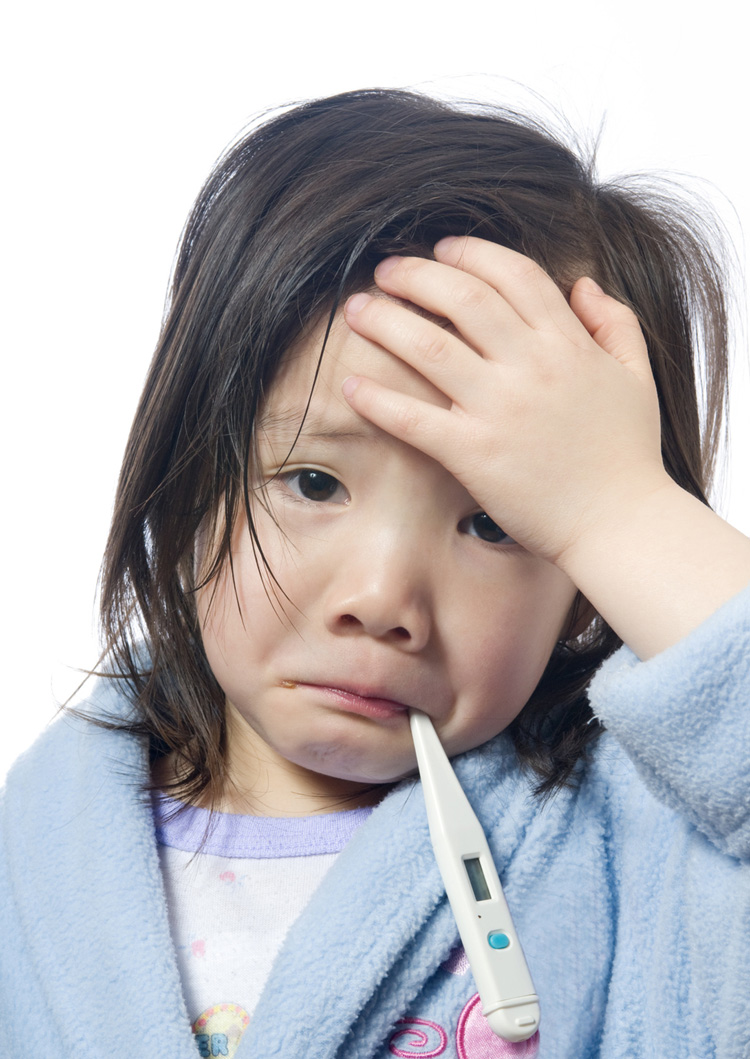
Well, running the numbers, it makes sense to do the 2 or 3 hours. So what is the problem? Emotions. Feelings of guilt, longing, sadness, jealousy, and fear keep up from doing what we know is healthiest for us. Fear of disappointing a boss, coworker, or family member; guilt from not helping a friend in need; sadness that you might miss something fun or exciting; jealousy that someone else can just go and go and never wear down; a longing to meet an unhealthy version of a perfect you.
Today, I stayed in bed all day and played on the internet and studied. I pushed my body farther than normal the past 4 days and I could feel the results in stiff and sore joints. Emotionally, there was a lot of crappy news that hit also. I knew my body and mind needed the break to recharge, but when a friend called on my help, I found myself torn. One of the things that I both love and hate about myself is my incredible desire to fix everything for everyone. That quality directly conflicts with my need to rest. Though I believe I did the right thing in taking the day to recharge, I feel incredibly guilty I was unable to help that friend today. Taking care of yourself is not the easiest thing to do, but it is something that has to be done and I am actively trying to live my own advice.
Wednesday, August 17, 2011
How Many Spoons Do YOU Have Today?
It's that time of year again where someone says something or a I read an article that reminds me of The Spoon Theory. If you, or anyone you know has what many like to call "an invisible illness," you can understand the frustration when someone doesn't look sick even though they are. The Spoon Theory is an excellent analogy to describe what it is like to live with "an invisible illness" every second of every day. I know it looks long, but trust me, it is worth the read. And now I share it with you, courtesy of ButYouDontLookSick.com.
The Spoon Theory, by Christine Miserandino
As I went to take some of my medicine with a snack as I usually did, she watched me with an awkward kind of stare, instead of continuing the conversation. She then asked me out of the blue what it felt like to have Lupus and be sick. I was shocked not only because she asked the random question, but also because I assumed she knew all there was to know about Lupus. She came to doctors with me, she saw me walk with a cane, and throw up in the bathroom. She had seen me cry in pain, what else was there to know?
The Spoon Theory, by Christine Miserandino
My best friend and I were in the diner, talking. As usual, it was very late and we were eating French fries with gravy. Like normal girls our age, we spent a lot of time in the diner while in college, and most of the time we spent talking about boys, music or trivial things, that seemed very important at the time. We never got serious about anything in particular and spent most of our time laughing.
As I went to take some of my medicine with a snack as I usually did, she watched me with an awkward kind of stare, instead of continuing the conversation. She then asked me out of the blue what it felt like to have Lupus and be sick. I was shocked not only because she asked the random question, but also because I assumed she knew all there was to know about Lupus. She came to doctors with me, she saw me walk with a cane, and throw up in the bathroom. She had seen me cry in pain, what else was there to know?
I started to ramble on about pills, and aches and pains, but she kept pursuing, and didn’t seem satisfied with my answers. I was a little surprised as being my roommate in college and friend for years; I thought she already knew the medical definition of Lupus. Then she looked at me with a face every sick person knows well, the face of pure curiosity about something no one healthy can truly understand. She asked what it felt like, not physically, but what it felt like to be me, to be sick.
As I tried to gain my composure, I glanced around the table for help or guidance, or at least stall for time to think. I was trying to find the right words. How do I answer a question I never was able to answer for myself? How do I explain every detail of every day being effected, and give the emotions a sick person goes through with clarity. I could have given up, cracked a joke like I usually do, and changed the subject, but I remember thinking if I don’t try to explain this, how could I ever expect her to understand. If I can’t explain this to my best friend, how could I explain my world to anyone else? I had to at least try.
At that moment, the spoon theory was born. I quickly grabbed every spoon on the table; hell I grabbed spoons off of the other tables. I looked at her in the eyes and said “Here you go, you have Lupus”. She looked at me slightly confused, as anyone would when they are being handed a bouquet of spoons. The cold metal spoons clanked in my hands, as I grouped them together and shoved them into her hands.
I explained that the difference in being sick and being healthy is having to make choices or to consciously think about things when the rest of the world doesn’t have to. The healthy have the luxury of a life without choices, a gift most people take for granted.
Most people start the day with unlimited amount of possibilities, and energy to do whatever they desire, especially young people. For the most part, they do not need to worry about the effects of their actions. So for my explanation, I used spoons to convey this point. I wanted something for her to actually hold, for me to then take away, since most people who get sick feel a “loss” of a life they once knew. If I was in control of taking away the spoons, then she would know what it feels like to have someone or something else, in this case Lupus, being in control.
She grabbed the spoons with excitement. She didn’t understand what I was doing, but she is always up for a good time, so I guess she thought I was cracking a joke of some kind like I usually do when talking about touchy topics. Little did she know how serious I would become?
I asked her to count her spoons. She asked why, and I explained that when you are healthy you expect to have a never-ending supply of “spoons”. But when you have to now plan your day, you need to know exactly how many “spoons” you are starting with. It doesn’t guarantee that you might not lose some along the way, but at least it helps to know where you are starting. She counted out 12 spoons. She laughed and said she wanted more. I said no, and I knew right away that this little game would work, when she looked disappointed, and we hadn’t even started yet. I’ve wanted more “spoons” for years and haven’t found a way yet to get more, why should she? I also told her to always be conscious of how many she had, and not to drop them because she can never forget she has Lupus.
I asked her to list off the tasks of her day, including the most simple. As, she rattled off daily chores, or just fun things to do; I explained how each one would cost her a spoon. When she jumped right into getting ready for work as her first task of the morning, I cut her off and took away a spoon. I practically jumped down her throat. I said ” No! You don’t just get up. You have to crack open your eyes, and then realize you are late. You didn’t sleep well the night before. You have to crawl out of bed, and then you have to make your self something to eat before you can do anything else, because if you don’t, you can’t take your medicine, and if you don’t take your medicine you might as well give up all your spoons for today and tomorrow too.” I quickly took away a spoon and she realized she hasn’t even gotten dressed yet. Showering cost her spoon, just for washing her hair and shaving her legs. Reaching high and low that early in the morning could actually cost more than one spoon, but I figured I would give her a break; I didn’t want to scare her right away. Getting dressed was worth another spoon. I stopped her and broke down every task to show her how every little detail needs to be thought about. You cannot simply just throw clothes on when you are sick. I explained that I have to see what clothes I can physically put on, if my hands hurt that day buttons are out of the question. If I have bruises that day, I need to wear long sleeves, and if I have a fever I need a sweater to stay warm and so on. If my hair is falling out I need to spend more time to look presentable, and then you need to factor in another 5 minutes for feeling badly that it took you 2 hours to do all this.
I think she was starting to understand when she theoretically didn’t even get to work, and she was left with 6 spoons. I then explained to her that she needed to choose the rest of her day wisely, since when your “spoons” are gone, they are gone. Sometimes you can borrow against tomorrow’s “spoons”, but just think how hard tomorrow will be with less “spoons”. I also needed to explain that a person who is sick always lives with the looming thought that tomorrow may be the day that a cold comes, or an infection, or any number of things that could be very dangerous. So you do not want to run low on “spoons”, because you never know when you truly will need them. I didn’t want to depress her, but I needed to be realistic, and unfortunately being prepared for the worst is part of a real day for me.
We went through the rest of the day, and she slowly learned that skipping lunch would cost her a spoon, as well as standing on a train, or even typing at her computer too long. She was forced to make choices and think about things differently. Hypothetically, she had to choose not to run errands, so that she could eat dinner that night.
When we got to the end of her pretend day, she said she was hungry. I summarized that she had to eat dinner but she only had one spoon left. If she cooked, she wouldn’t have enough energy to clean the pots. If she went out for dinner, she might be too tired to drive home safely. Then I also explained, that I didn’t even bother to add into this game, that she was so nauseous, that cooking was probably out of the question anyway. So she decided to make soup, it was easy. I then said it is only 7pm, you have the rest of the night but maybe end up with one spoon, so you can do something fun, or clean your apartment, or do chores, but you can’t do it all.
I rarely see her emotional, so when I saw her upset I knew maybe I was getting through to her. I didn’t want my friend to be upset, but at the same time I was happy to think finally maybe someone understood me a little bit. She had tears in her eyes and asked quietly “Christine, How do you do it? Do you really do this everyday?” I explained that some days were worse then others; some days I have more spoons then most. But I can never make it go away and I can’t forget about it, I always have to think about it. I handed her a spoon I had been holding in reserve. I said simply, “I have learned to live life with an extra spoon in my pocket, in reserve. You need to always be prepared.”
Its hard, the hardest thing I ever had to learn is to slow down, and not do everything. I fight this to this day. I hate feeling left out, having to choose to stay home, or to not get things done that I want to. I wanted her to feel that frustration. I wanted her to understand, that everything everyone else does comes so easy, but for me it is one hundred little jobs in one. I need to think about the weather, my temperature that day, and the whole day’s plans before I can attack any one given thing. When other people can simply do things, I have to attack it and make a plan like I am strategizing a war. It is in that lifestyle, the difference between being sick and healthy. It is the beautiful ability to not think and just do. I miss that freedom. I miss never having to count “spoons”.
After we were emotional and talked about this for a little while longer, I sensed she was sad. Maybe she finally understood. Maybe she realized that she never could truly and honestly say she understands. But at least now she might not complain so much when I can’t go out for dinner some nights, or when I never seem to make it to her house and she always has to drive to mine. I gave her a hug when we walked out of the diner. I had the one spoon in my hand and I said “Don’t worry. I see this as a blessing. I have been forced to think about everything I do. Do you know how many spoons people waste everyday? I don’t have room for wasted time, or wasted “spoons” and I chose to spend this time with you.”
Ever since this night, I have used the spoon theory to explain my life to many people. In fact, my family and friends refer to spoons all the time. It has been a code word for what I can and cannot do. Once people understand the spoon theory they seem to understand me better, but I also think they live their life a little differently too. I think it isn’t just good for understanding Lupus, but anyone dealing with any disability or illness. Hopefully, they don’t take so much for granted or their life in general. I give a piece of myself, in every sense of the word when I do anything. It has become an inside joke. I have become famous for saying to people jokingly that they should feel special when I spend time with them, because they have one of my “spoons”.
.
Subscribe to:
Posts (Atom)